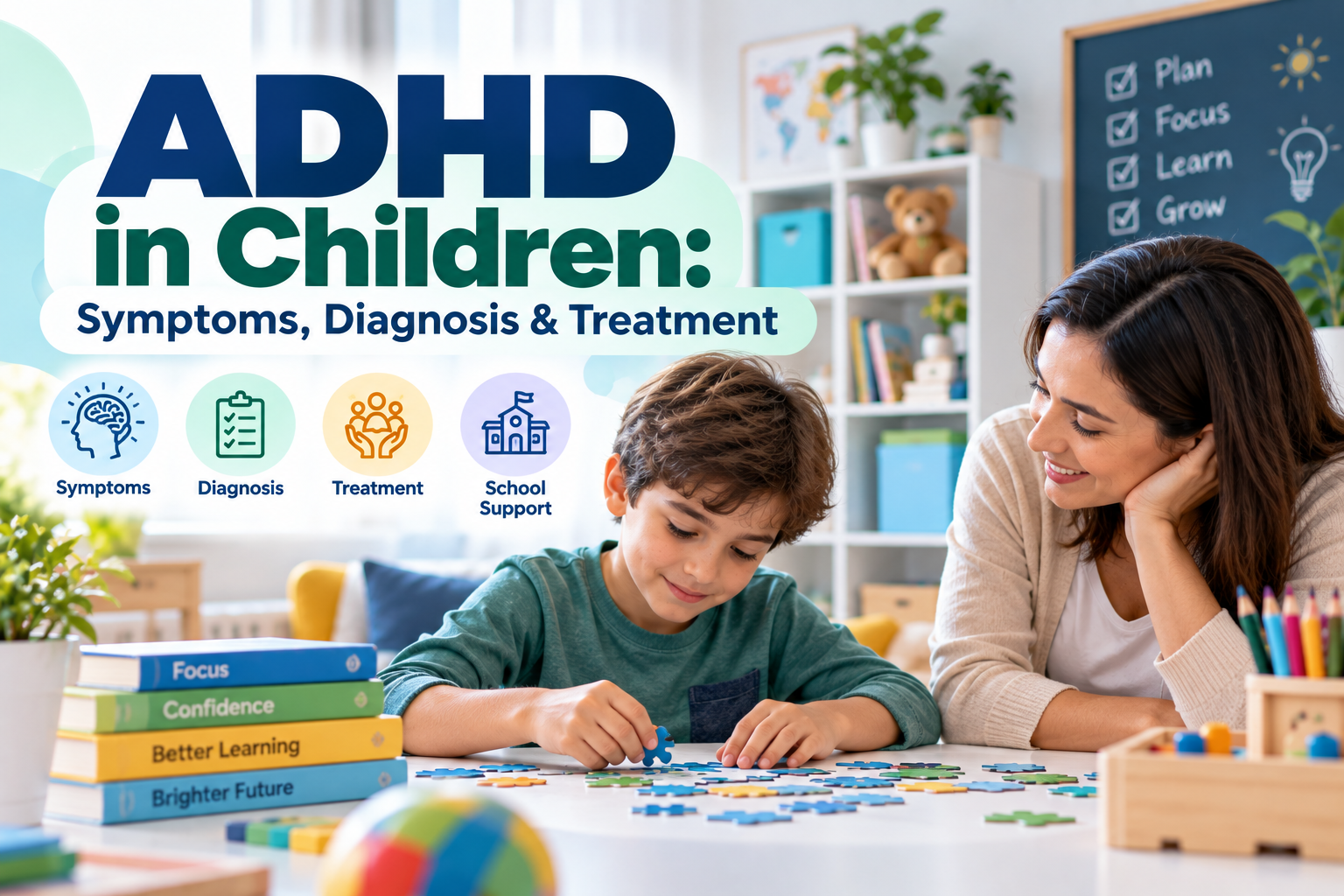
ADHD in Adults: Symptoms, Diagnosis & Treatment
Attention-deficit/hyperactivity disorder (ADHD) can continue into adulthood and may affect attention, organization, impulse control, time management, work, relationships, and everyday responsibilities. Adult ADHD can look different from the symptoms commonly noticed in children, so recognizing the overall pattern is important.
- ADHD can affect adults as well as children and teenagers.
- Common difficulties may involve attention, organization, time management, impulsivity, and task completion.
- Adult ADHD is diagnosed through a comprehensive clinical assessment rather than a single test.
- Treatment may include behavioral strategies, psychological support, medication when clinically appropriate, or a combination of approaches.
- Practical systems for organization, routines, sleep, work, and daily responsibilities can support better functioning.
What Is ADHD in Adults?
ADHD is a neurodevelopmental condition that begins during childhood but may continue into adulthood. Adults with ADHD may experience persistent difficulties with attention, organization, impulse control, activity level, or managing everyday tasks.
Adult ADHD does not necessarily mean that someone is unable to concentrate. Many adults can focus strongly on activities that are interesting or highly engaging while finding routine, repetitive, or less stimulating tasks more difficult to manage.
The way ADHD affects an adult can also change with age and circumstances. School-related difficulties may become workplace challenges, while problems with organization or time management may affect household responsibilities, finances, relationships, or other areas of daily life.
Common Symptoms of ADHD in Adults
Adult ADHD symptoms can vary from person to person. Some adults mainly experience problems with attention and organization, while others experience more noticeable impulsivity or restlessness. Many experience a combination of difficulties.
1. Difficulty Maintaining Attention
An adult with ADHD may find it difficult to stay focused during lengthy meetings, reading, conversations, paperwork, or other tasks that require sustained attention.
- Becoming distracted during routine tasks
- Difficulty completing lengthy activities
- Missing details in instructions or written information
- Frequently shifting between tasks
- Difficulty listening through long conversations
2. Forgetfulness
Forgetfulness can become particularly noticeable when an adult has multiple responsibilities. This may include forgetting appointments, deadlines, messages, household tasks, or where everyday items were placed.
3. Problems With Organization
Organization difficulties may affect work, studies, household responsibilities, finances, or personal schedules.
- Difficulty prioritizing tasks
- Disorganized paperwork or digital files
- Starting many tasks without completing them
- Difficulty keeping track of deadlines
- Frequently losing important items
4. Poor Time Management
Some adults with ADHD have difficulty estimating how long activities will take. They may underestimate preparation time, arrive late, postpone tasks, or struggle to divide large projects into manageable steps.
5. Procrastination
Procrastination can occur when a task feels overwhelming, repetitive, boring, or difficult to organize. A person may understand that something needs to be completed but still struggle to begin or maintain progress.
6. Impulsivity
Impulsivity may involve acting or speaking before fully considering the consequences. Examples can include interrupting conversations, making quick decisions, or having difficulty waiting during certain situations.
7. Restlessness
Adults may experience restlessness differently from children. Instead of obvious physical hyperactivity, an adult may feel internally restless, have difficulty sitting through lengthy activities, or frequently feel the need to stay occupied.
8. Difficulty Completing Tasks
Some adults with ADHD can start projects enthusiastically but struggle to complete them. This may be especially noticeable when several tasks compete for attention.
How ADHD Symptoms May Affect Daily Life
| Area | Possible Difficulties |
|---|---|
| Work | Missed deadlines, disorganization, difficulty prioritizing, or trouble maintaining attention. |
| Home | Difficulty managing chores, schedules, paperwork, or household routines. |
| Relationships | Interrupting, forgetfulness, difficulty listening, or challenges with consistent communication. |
| Finances | Difficulty tracking bills, deadlines, budgets, or other financial responsibilities. |
| Personal routines | Difficulty maintaining consistent schedules, planning, sleep routines, or organization systems. |
ADHD in Adults vs. ADHD in Children
The underlying condition is the same, but the way symptoms appear in children can change with age and responsibilities.
| Children | Adults |
|---|---|
| Difficulty remaining seated | Internal restlessness or difficulty relaxing |
| Schoolwork difficulties | Work, study, or professional organization difficulties |
| Forgetting school materials | Forgetting appointments, deadlines, or responsibilities |
| Difficulty following classroom instructions | Difficulty managing complex instructions or long projects |
ADHD and Work
Work environments can highlight difficulties with planning, prioritization, deadlines, meetings, interruptions, and multitasking. The impact can vary considerably depending on the person's responsibilities and the structure of their workplace.
Helpful workplace strategies may include breaking large projects into smaller tasks, using calendars and reminders, keeping important information in one consistent location, and reducing unnecessary distractions when possible.
ADHD and Relationships
ADHD-related difficulties can sometimes affect communication and relationships. Forgetfulness, interrupting, losing track of conversations, or difficulty following through with plans may be misunderstood as a lack of interest or effort.
Open communication, practical reminders, agreed routines, and realistic expectations may help reduce misunderstandings. When relationship difficulties are significant, professional support may also be useful.
ADHD and Sleep
Sleep and attention are closely connected. Poor or insufficient sleep can make concentration, memory, emotional regulation, and daytime functioning more difficult. Adults experiencing persistent sleep problems should discuss them with a healthcare professional.
Maintaining a consistent sleep schedule, reducing unnecessary evening distractions, and developing a predictable bedtime routine may support healthier sleep habits.
When Should an Adult Consider an ADHD Evaluation?
An ADHD evaluation may be worth discussing with a healthcare professional when attention, organization, impulsivity, or restlessness have been persistent and are causing meaningful difficulties in work, education, relationships, or everyday responsibilities.
A professional assessment is especially important when symptoms overlap with other possible causes of concentration or organizational difficulties. The goal is to understand the complete pattern rather than assuming that every attention problem is ADHD.
Quick Summary
| Topic | Key Point |
|---|---|
| ADHD in adults | ADHD can continue from childhood into adulthood and affect multiple areas of life. |
| Symptoms | Common difficulties include attention, organization, time management, impulsivity, and task completion. |
| Work and relationships | Symptoms may affect productivity, communication, planning, and follow-through. |
| Evaluation | Diagnosis requires a comprehensive professional assessment. |
| Support | Treatment and practical organization strategies can help adults manage symptoms and daily responsibilities. |
Understanding Adult ADHD in More Detail
Adult ADHD can affect different people in different ways. Some adults may mainly struggle with attention and organization, while others may experience more noticeable impulsivity, restlessness, or difficulty regulating daily routines. Symptoms can also vary depending on the person's environment, responsibilities, and level of structure.
ADHD and Executive Functioning
Executive functioning refers to mental skills that help a person plan, organize, prioritize, remember information, manage time, and complete tasks. Difficulties in these areas can be particularly noticeable in adults with ADHD.
For example, a person may understand exactly what needs to be done but still find it difficult to decide where to begin, maintain attention, switch between tasks, or finish the activity.
- Planning and prioritizing tasks
- Starting activities
- Maintaining attention
- Managing time
- Remembering instructions
- Switching between activities
- Completing multi-step projects
ADHD and Emotional Regulation
Some adults with ADHD report difficulty managing frustration, impatience, or strong emotional reactions. Emotional regulation difficulties can affect communication, workplace interactions, family life, and other everyday situations.
Recognizing patterns can be helpful. Taking a short pause, identifying the situation that triggered the reaction, and using established coping strategies may help a person respond more deliberately.
ADHD and Procrastination
Procrastination is common among adults for many different reasons. In people with ADHD, it may be associated with difficulty starting tasks, estimating time, maintaining attention, or managing activities that feel repetitive or overwhelming.
Breaking a large task into smaller actions can make it easier to begin. For example, instead of writing down “finish the project,” a person might create smaller steps such as reviewing the instructions, collecting information, completing the first section, and checking the finished work.
ADHD and Multitasking
Adults may attempt to manage several activities at the same time, particularly when they have many responsibilities. However, frequently switching between tasks can make it harder to maintain focus and remember what still needs to be completed.
A simpler approach may be to identify the most important task, work on it for a defined period, and then move to the next priority.
Organization Strategies for Adults With ADHD
Practical organization systems can reduce the need to rely on memory alone. The most useful approach is usually one that is simple enough to maintain consistently.
Use One Main Calendar
Keeping appointments, deadlines, meetings, and important events in one primary calendar can reduce confusion caused by using several disconnected systems.
Create Short Task Lists
A long list can feel overwhelming. Breaking responsibilities into a small number of clearly defined tasks can make priorities easier to identify.
Use Reminders
Phone reminders, calendar alerts, written notes, and other appropriate tools can help compensate for forgetfulness and reduce dependence on memory.
Keep Important Items in Consistent Places
Keeping keys, documents, work materials, and other frequently used items in designated locations can make them easier to find.
Break Large Projects Into Steps
Large projects can be divided into smaller actions with clear deadlines. This can make progress easier to track and may reduce the feeling of being overwhelmed.
ADHD and Studying in Adults
Adults returning to education, completing professional training, or preparing for examinations may experience difficulties with sustained attention, organization, reading, planning, and deadlines.
Useful strategies may include studying in shorter focused periods, reducing distractions, using written schedules, breaking assignments into smaller sections, and keeping study materials organized.
ADHD and Household Responsibilities
Household tasks may become difficult when several responsibilities compete for attention. Bills, cleaning, shopping, appointments, meal planning, and other activities may be easier to manage when they are incorporated into predictable routines.
| Challenge | Possible Strategy |
|---|---|
| Forgetting appointments | Use calendar reminders and alerts. |
| Unfinished chores | Divide chores into short, specific tasks. |
| Missed bills | Use a consistent bill-tracking system and reminders. |
| Lost items | Keep frequently used items in designated locations. |
ADHD and Social Situations
Attention difficulties or impulsive communication may sometimes affect social interactions. An adult may interrupt, lose track of a conversation, forget plans, or become distracted during discussions.
Simple communication strategies can help. These may include allowing others to finish speaking, using reminders for important commitments, asking for clarification when needed, and discussing practical ways to stay organized.
How Adult ADHD Is Evaluated
There is no single laboratory test that confirms ADHD. A healthcare professional evaluates symptoms and their impact using a comprehensive assessment.
The assessment may consider current symptoms, developmental history, functioning in different settings, and whether other conditions or circumstances could better explain the difficulties.
Information from family members or records from earlier life may sometimes be useful when available, particularly because ADHD symptoms begin during childhood.
Treatment Approaches for Adult ADHD
Adult ADHD treatment is individualized. Depending on the person's symptoms, needs, preferences, and clinical assessment, treatment may involve behavioral strategies, psychological support, medication prescribed by an appropriate healthcare professional, or a combination of approaches.
Behavioral and Organizational Strategies
Structured routines, reminders, task-management systems, planning techniques, and environmental adjustments can help adults manage everyday responsibilities.
Psychological Support
Psychological approaches may help with organization, coping strategies, emotional regulation, procrastination, and difficulties that occur alongside ADHD.
Medication
Medication may be considered as part of ADHD treatment for some adults. The choice of treatment should be made with an appropriately qualified healthcare professional after an individual assessment.
Medication decisions can depend on factors such as symptoms, other health considerations, potential side effects, and individual circumstances. Adults should follow professional medical advice rather than changing or starting treatment independently.
Building a Sustainable Routine
A useful routine does not need to be complicated. A consistent structure for waking, work or study, meals, physical activity, household responsibilities, relaxation, and sleep can make daily tasks more predictable.
It can be helpful to introduce changes gradually rather than attempting to completely redesign every part of the day at once.
When Adult ADHD May Need Professional Support
Consider speaking with a healthcare professional when ongoing attention, organization, impulsivity, or restlessness is interfering with important areas of life.
Professional evaluation may be particularly useful when difficulties affect employment, education, relationships, household responsibilities, or general daily functioning.
It is also important to seek professional assessment when concentration problems are new, changing, or accompanied by other concerning symptoms, because ADHD is not the only possible explanation for difficulties with attention or organization.
Myths About ADHD in Adults
Myth 1: ADHD Only Happens in Children
Fact: ADHD can continue into adulthood. Some adults may only recognize the pattern later in life, particularly when responsibilities become more demanding.
Myth 2: Adults With ADHD Cannot Concentrate
Fact: ADHD involves difficulties with attention regulation rather than a complete inability to concentrate. Some adults can focus intensely on activities that are particularly engaging.
Myth 3: ADHD Is Simply a Lack of Discipline
Fact: ADHD is a neurodevelopmental condition. Difficulties with organization, attention, and impulse control should not automatically be interpreted as laziness or a lack of effort.
Myth 4: Everyone Who Is Forgetful Has ADHD
Fact: Forgetfulness can have many causes. A diagnosis requires a broader assessment of symptoms, history, and functioning.
Myth 5: Adult ADHD Cannot Be Managed
Fact: Many adults can develop effective strategies and receive professional support to manage ADHD-related difficulties and improve daily functioning.
Key Message
Adult ADHD can affect attention, organization, time management, communication, work, and everyday responsibilities. A proper professional assessment can help distinguish ADHD from other possible causes of similar difficulties. With appropriate support and practical strategies, adults can build systems that better match their needs.
Conclusion
ADHD in adults can affect attention, organization, time management, impulse control, work, relationships, and everyday responsibilities. The way symptoms appear can vary from person to person and may change as responsibilities and environments change.
Adult ADHD is diagnosed through a comprehensive professional assessment rather than a single test. Because sleep problems, stress, anxiety, depression, and other conditions can also affect concentration and organization, understanding the complete pattern is important.
Treatment and support are individualized. Depending on a person's needs, professional care may include behavioral and organizational strategies, psychological support, medication when clinically appropriate, or a combination of approaches.
Practical systems such as calendars, reminders, written task lists, structured routines, and breaking large responsibilities into smaller steps may also help adults manage everyday challenges.
Adult ADHD is a manageable health condition, and seeking appropriate professional evaluation can help identify the causes of ongoing difficulties and guide suitable support. Individual treatment decisions should always be discussed with a qualified healthcare professional.
Medical Disclaimer
Medical Disclaimer: This article is provided for general educational and informational purposes only. It is not intended to diagnose, treat, cure, or prevent ADHD or any other medical condition.
Symptoms such as difficulty concentrating, forgetfulness, restlessness, poor organization, or problems with time management can have multiple possible causes. A qualified healthcare professional should evaluate persistent or significant symptoms.
Do not start, stop, or change any medication or treatment plan based solely on information in this article. Treatment decisions should be made with an appropriately qualified healthcare professional based on individual circumstances.
Sources & References
- National Institute of Mental Health (NIMH) — Attention-Deficit/Hyperactivity Disorder (ADHD)
- National Institute of Mental Health (NIMH) — ADHD Information
- Centers for Disease Control and Prevention (CDC) — ADHD Signs and Symptoms
- Centers for Disease Control and Prevention (CDC) — Diagnosing ADHD
- Centers for Disease Control and Prevention (CDC) — ADHD Treatment
Related Health Resources
Explore more trusted health resources related to this topic. These articles can help you better understand symptoms, causes, treatment options and prevention strategies.