Introduction
Depression is not a single condition. Mental health professionals recognize several different types of depression, each with its own symptoms, duration, possible causes, and treatment approaches. Understanding these differences can help individuals recognize symptoms earlier and seek appropriate professional care.
While all forms of depression may affect mood, energy, motivation, and daily functioning, they do not affect everyone in the same way. Some types develop after major life events, while others are influenced by biological, hormonal, or seasonal factors. Accurate diagnosis is important because treatment recommendations may vary depending on the specific type of depression.
This educational guide explains the major types of depression, their symptoms, causes, diagnosis, treatment options, and prevention strategies. It is intended for informational purposes only and should not replace professional medical advice.
Although treatment varies depending on the type of depression, many individuals benefit from evidence-based psychotherapy, medication when appropriate, and healthy lifestyle changes. Learn more in our guide on Depression Treatment Options.
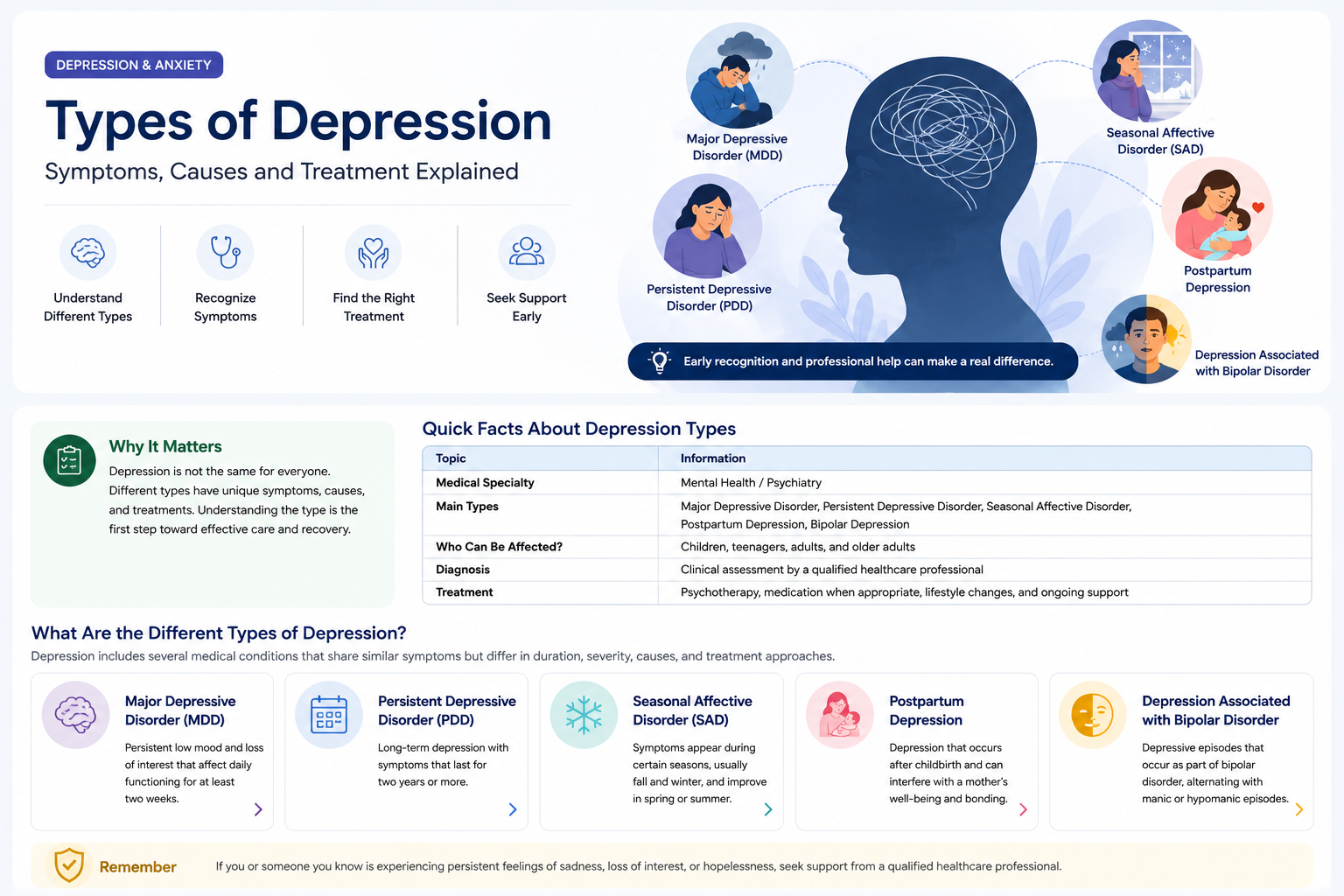
Quick Facts About Depression Types
| Topic | Information |
|---|---|
| Medical Specialty | Mental Health / Psychiatry |
| Main Types | Major Depressive Disorder, Persistent Depressive Disorder, Seasonal Affective Disorder, Postpartum Depression, Bipolar Depression |
| Who Can Be Affected? | Children, teenagers, adults, and older adults |
| Diagnosis | Clinical assessment by a qualified healthcare professional |
| Treatment | Psychotherapy, medication when appropriate, lifestyle changes, and ongoing support |
What Are the Different Types of Depression?
If you are new to this topic, we recommend reading our complete guide on Depression: Symptoms, Causes, Diagnosis, Treatment & Prevention before learning about the different types of depression.
Depression includes several medical conditions that share similar symptoms but differ in their duration, severity, causes, and treatment considerations. Mental health professionals use internationally recognized diagnostic criteria to identify the specific form of depression affecting an individual.
Recognizing the correct type of depression is important because treatment plans may differ significantly. Some individuals experience short episodes triggered by life events, while others develop long-term depressive disorders that require ongoing management.
Why Understanding Depression Types Matters
Many people assume depression is the same for everyone, but this is not the case. Different types of depression may require different treatment approaches and follow-up care. Understanding these distinctions may help reduce stigma, encourage early diagnosis, and improve long-term outcomes.
- Supports earlier recognition of symptoms.
- Encourages timely professional evaluation.
- Helps explain why treatment varies between individuals.
- Improves awareness of risk factors.
- Promotes better understanding of mental health conditions.
Relationship Between Depression Types and Mental Health
Depression often exists alongside other mental health or physical health conditions. Anxiety disorders, including panic disorder, chronic medical illnesses, sleep disorders, and substance misuse may occur together with depression. A comprehensive assessment by a qualified healthcare professional helps identify all contributing factors and supports the development of an individualized treatment plan.
Related Health Resource
If you are looking for a complete overview of depression, including symptoms, causes, diagnosis, treatment, and prevention, read our guide:
Depression: Symptoms, Causes, Diagnosis, Treatment & Prevention
Key Takeaways
- Depression includes several different medical conditions.
- Symptoms and treatment approaches vary depending on the specific type.
- Professional diagnosis is important for selecting appropriate treatment.
- Many forms of depression respond well to evidence-based treatment.
- Early recognition and timely support may improve quality of life.
Major Types of Depression
Mental health professionals classify depression into several types based on symptoms, duration, severity, and the circumstances surrounding their development. Although these conditions share certain characteristics, each type has unique features that influence diagnosis and treatment.
| Type of Depression | Main Characteristics |
|---|---|
| Major Depressive Disorder (MDD) | Persistent low mood with significant impact on daily functioning. |
| Persistent Depressive Disorder (PDD) | Long-lasting depression that continues for two years or longer. |
| Seasonal Affective Disorder (SAD) | Symptoms occur during particular seasons, usually winter. |
| Postpartum Depression | Depression occurring after childbirth requiring professional assessment. |
| Depression Associated With Bipolar Disorder | Depressive episodes occurring as part of bipolar disorder. |
Major Depressive Disorder (MDD)
Major Depressive Disorder is one of the most common forms of depression. To learn more about the general symptoms, diagnosis, treatment, and prevention of depression, read our complete depression guide.
Symptoms of depression may vary by age and gender. Explore our educational guides on Depression Symptoms in Women, Depression Symptoms in Men, and Depression Symptoms in Teenagers.
Major Depressive Disorder is the most commonly diagnosed form of depression. Individuals experience persistent symptoms that interfere with work, education, relationships, and daily activities. Symptoms generally last for at least two weeks and may continue much longer without appropriate treatment.
Women may experience depression differently because of hormonal changes throughout life. Read our dedicated guide on Depression Symptoms in Women to learn more.
Depression symptoms may differ between men and women because of biological, hormonal, and social factors. Explore our dedicated guides on Depression Symptoms in Women and Depression Symptoms in Men.
Common Symptoms
- Persistent sadness.
- Loss of interest in previously enjoyable activities.
- Fatigue and reduced energy.
- Sleep disturbances.
- Changes in appetite or body weight.
- Difficulty concentrating.
- Feelings of guilt or worthlessness.
- Reduced motivation.
Many individuals with Major Depressive Disorder improve with evidence-based treatment, including psychotherapy, medication when appropriate, and healthy lifestyle modifications.
Persistent Depressive Disorder (PDD)
Persistent Depressive Disorder, previously known as dysthymia, is a long-term form of depression. Symptoms are often less severe than Major Depressive Disorder but continue for two years or longer, affecting overall quality of life.
Common Symptoms
- Long-lasting low mood.
- Low self-esteem.
- Reduced energy.
- Poor concentration.
- Sleep problems.
- Feelings of hopelessness.
- Reduced productivity.
Because symptoms develop gradually, some individuals may not recognize that they are experiencing a treatable mental health condition.
Seasonal Affective Disorder (SAD)
Seasonal Affective Disorder is a type of depression associated with seasonal changes. Symptoms most commonly appear during autumn and winter when daylight hours become shorter and often improve during spring and summer.
Possible Symptoms
- Persistent low mood.
- Reduced energy.
- Sleeping more than usual.
- Difficulty concentrating.
- Increased appetite.
- Reduced interest in social activities.
Management may include psychotherapy, lifestyle modifications, and other treatments recommended by a healthcare professional.
Postpartum Depression
Postpartum depression is a serious mental health condition that may develop after childbirth. It is different from the temporary emotional changes commonly referred to as the "baby blues." Symptoms may interfere with a parent's ability to care for themselves or their baby and should always be evaluated by a qualified healthcare professional.
Common Symptoms
- Persistent sadness.
- Severe anxiety.
- Difficulty bonding with the baby.
- Sleep disturbances.
- Low energy.
- Feelings of hopelessness.
Early diagnosis and treatment are important for both the parent's health and the well-being of the child.
Depression Associated With Bipolar Disorder
Bipolar disorder includes episodes of depression as well as periods of unusually elevated mood, known as mania or hypomania. Because treatment differs from Major Depressive Disorder, accurate diagnosis is extremely important.
Depressive Symptoms May Include
- Persistent sadness.
- Fatigue.
- Reduced interest in activities.
- Difficulty concentrating.
- Sleep changes.
- Loss of motivation.
A mental health professional considers both depressive episodes and periods of elevated mood before making a diagnosis of bipolar disorder.
Did You Know?
Different types of depression may share similar symptoms, but their underlying causes, duration, and treatment recommendations can vary considerably. Receiving an accurate diagnosis is an important first step toward appropriate care.
Common Symptoms Across Different Types of Depression
Although each type of depression has unique characteristics, many symptoms overlap. The severity, duration, and impact on daily life vary from person to person. Recognizing these common symptoms may encourage individuals to seek professional evaluation at an earlier stage.
| Symptom | Common in Most Types? |
|---|---|
| Persistent sadness | Yes |
| Loss of interest in activities | Yes |
| Fatigue | Yes |
| Sleep disturbances | Yes |
| Appetite changes | Often |
| Difficulty concentrating | Yes |
| Feelings of hopelessness | Common |
| Reduced motivation | Common |
Possible Causes of Different Types of Depression
No single factor causes depression. Instead, experts believe that depression develops through a combination of biological, psychological, environmental, and social influences. The exact combination varies for each individual.
Biological Factors
- Family history of depression.
- Differences in brain chemistry.
- Hormonal changes.
- Certain neurological conditions.
- Long-term physical illnesses.
Psychological Factors
- Chronic stress.
- Traumatic experiences.
- Childhood adversity.
- Low self-esteem.
- Anxiety disorders.
Environmental Factors
- Relationship problems.
- Financial stress.
- Work-related pressure.
- Loss of a loved one.
- Social isolation.
Risk Factors
Although anyone may develop depression, certain factors increase the likelihood of experiencing one of its different forms.
- Family history of depression.
- Previous episodes of depression.
- Chronic medical conditions.
- Persistent stress.
- Poor sleep quality.
- Substance misuse.
- Limited social support.
- Major life transitions.
How Healthcare Professionals Diagnose Different Types of Depression
Healthcare professionals diagnose depression through a comprehensive assessment rather than a single laboratory test. The evaluation considers symptoms, medical history, mental health history, duration of symptoms, and their impact on daily functioning.
The assessment may include:
- Clinical interview.
- Review of medical history.
- Mental health questionnaires.
- Physical examination when appropriate.
- Laboratory investigations to exclude other medical conditions if clinically indicated.
Accurate diagnosis helps determine the specific type of depression and supports the development of an individualized treatment plan.
Conditions That May Be Mistaken for Depression
Several health conditions may produce symptoms similar to depression. A professional evaluation helps distinguish depression from other medical or psychological disorders.
| Condition | Why It May Appear Similar |
|---|---|
| Anxiety Disorders | Fatigue, poor concentration, sleep disturbance. |
| Thyroid Disorders | Low mood, tiredness, weight changes. |
| Sleep Disorders | Daytime fatigue and reduced concentration. |
| Chronic Pain Conditions | Reduced activity and emotional distress. |
| Bipolar Disorder | Depressive episodes resemble major depression. |
When Should You Seek Medical Advice?
Persistent symptoms lasting two weeks or longer, especially when they interfere with work, education, relationships, or daily activities, should be discussed with a qualified healthcare professional. Early diagnosis may improve treatment outcomes and reduce complications.
Treatment Options for Different Types of Depression
Treatment for depression depends on the specific type of depression, symptom severity, overall health, and individual needs. Many people benefit from a personalized treatment plan developed by a qualified healthcare professional. Early treatment may improve recovery and reduce the impact of symptoms on daily life.
Psychotherapy
Psychotherapy, often called talk therapy, is considered one of the most effective evidence-based treatments for many types of depression. Therapy helps individuals understand emotions, identify unhelpful thought patterns, improve coping strategies, and develop healthier behaviors.
Common forms of psychotherapy include:
- Cognitive Behavioral Therapy (CBT)
- Interpersonal Therapy (IPT)
- Behavioral Activation
- Supportive Counseling
- Problem-Solving Therapy
The type of therapy recommended depends on the individual's symptoms, diagnosis, and personal circumstances.
Medications
Some individuals with moderate to severe depression may benefit from antidepressant medications prescribed by a qualified healthcare professional. Medication selection depends on several factors, including medical history, symptom pattern, age, possible side effects, and other health conditions.
Antidepressants should only be started, adjusted, or discontinued under medical supervision.
Lifestyle Management
Healthy daily habits may complement professional treatment and improve overall mental well-being.
- Maintain a regular sleep schedule.
- Engage in physical activity appropriate for your health.
- Eat a balanced and nutritious diet.
- Practice stress management techniques.
- Maintain supportive social relationships.
- Avoid excessive alcohol consumption and recreational drug use.
- Follow treatment recommendations consistently.
Can Different Types of Depression Be Prevented?
Depression cannot always be prevented because many contributing factors are beyond an individual's control. However, healthy lifestyle habits and early intervention may reduce risk and support emotional well-being.
- Seek support during stressful life events.
- Maintain regular physical activity.
- Prioritize healthy sleep habits.
- Manage chronic medical conditions appropriately.
- Stay socially connected.
- Practice healthy stress management techniques.
- Consult a healthcare professional if symptoms persist.
Living With Depression
Living with depression may be challenging, but many people successfully manage their symptoms through professional treatment, healthy lifestyle habits, and ongoing support from family, friends, and healthcare providers. Recovery often occurs gradually, and regular follow-up with healthcare professionals is an important part of long-term management.
Developing healthy routines, participating in enjoyable activities, maintaining realistic expectations, and seeking support when needed may contribute to improved quality of life.
When Should You Seek Immediate Medical Attention?
If symptoms become severe, rapidly worsen, or significantly interfere with personal safety or daily functioning, immediate evaluation by a qualified healthcare professional is important. Early intervention may help prevent complications and ensure appropriate care.
Key Takeaways
- Depression includes several different medical conditions with unique characteristics.
- Accurate diagnosis is important because treatment varies between different types of depression.
- Psychotherapy, medication when appropriate, and healthy lifestyle habits are common components of treatment.
- Early recognition and professional support may improve long-term outcomes.
- Anyone experiencing persistent symptoms should seek evaluation from a qualified healthcare professional.
Conclusion
Understanding the different types of depression helps individuals recognize symptoms earlier and appreciate why treatment plans differ from person to person. Although depression can significantly affect emotional, physical, and social well-being, effective treatments are available. Early diagnosis, evidence-based care, and ongoing support allow many individuals to successfully manage symptoms and improve their quality of life.
If you are concerned about persistent symptoms of depression, consult a qualified healthcare professional for an accurate diagnosis and personalized treatment plan.
Medical Disclaimer
This article is provided for educational purposes only and should not be considered medical advice, diagnosis, or treatment. Always consult a qualified healthcare professional regarding any health concerns or before making decisions related to your medical care.
Sources & References
- World Health Organization (WHO) – Depression Fact Sheet
- National Institute of Mental Health (NIMH) – Depression
- Mayo Clinic – Depression: Symptoms and Causes
- NHS – Clinical Depression Overview
- MedlinePlus – Depression
Related Health Resources
Explore more trusted health resources related to this topic. These articles can help you better understand symptoms, causes, treatment options and prevention strategies.